
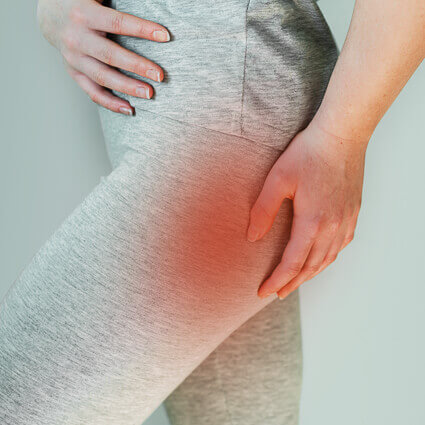
 Few things stop you in your tracks like sciatica. That sharp, shooting sensation that travels from your lower back into your buttock and down the leg can make sitting, standing, driving, and even sleeping feel like hard work. If that sounds familiar, you’re far from alone — sciatica is one of the most common reasons people come through our door in Hove.
This article explains what sciatica actually is, what tends to cause it, the warning signs that mean you should seek help urgently, and how a chiropractor approaches it. Chiropractic can help with sciatica, and understanding what’s going on is the first step to dealing with it properly.
Sciatica is the name given to any sort of pain caused by irritation or compression of the sciatic nerve — the body’s longest nerve, which runs from the lower back, through the buttock, and down the back of each leg towards the foot. Importantly, sciatica isn’t a diagnosis in itself; it’s a set of symptoms pointing to something that’s irritating that nerve, usually somewhere in the lower back.
How it typically feels
- Pain that radiates from the lower back or buttock down one leg, sometimes as far as the foot and toes
- Pins and needles, tingling, or numbness along the same path
- Weakness in the leg, calf, or foot in some cases
- Symptoms usually affecting one side rather than both
- Discomfort that’s often worse with prolonged sitting, bending, coughing or sneezing
The intensity varies enormously from person to person — some people notice a mild, nagging ache, while others find it genuinely debilitating.
What causes sciatica?
Because sciatica is a symptom, the useful question is always what’s irritating the nerve? Common culprits include:
- A bulging or herniated disc in the lower back pressing on the nerve root — the most frequent cause
- Age-related changes in the spine, such as narrowing of the spaces the nerves pass through (spinal stenosis)
- Tightness or dysfunction in the muscles of the buttock and lower back that can aggravate the nerve’s path
- A slipped vertebra (spondylolisthesis) or general wear-and-tear in the lower spine
Factors like prolonged sitting, heavy or awkward lifting, being less active, and everyday postural habits can all play a part in why the problem develops or lingers.
When sciatica is a medical emergency
Most sciatica is not dangerous — but a small number of cases need urgent medical attention. Go to A&E or call 999 / 111 straight away if you develop any of the following, which can signal a serious condition affecting the nerves at the base of the spine (cauda equina syndrome):
- Numbness or tingling around the saddle area — the inner thighs, buttocks, or genitals
- Loss of control of your bladder or bowels, or difficulty passing urine
- Numbness or weakness in both legs, or symptoms that are rapidly getting worse
- New sexual dysfunction of sudden onset
Also see your GP promptly if your sciatica follows a significant injury, comes with unexplained fever or weight loss, or you have a history of cancer. These features need medical assessment before any manual therapy. When in doubt, get checked.
How a chiropractor approaches sciatica
The starting point is always a proper assessment. As chiropractic care professionals regulated by law, chiropractors are trained to take a thorough history, carry out a physical and neurological examination, and work out what’s most likely irritating the nerve — as well as to recognise the red flags above that mean onward referral rather than treatment.
For patients with sciatica, a chiropractor typically uses a combination of hands-on manual techniques — such as spinal manipulation, joint mobilisation, and soft-tissue work — alongside a tailored rehabilitation exercise programme and practical self-management advice on movement, posture, and staying active. The national clinical guideline for low back pain and sciatica (NICE NG59) supports the use of manual therapy, but specifically as part of a wider package that includes exercise — which is exactly how we approach it here.
Everyone’s spine and circumstances are different, so there’s no one-size-fits-all plan, and outcomes vary from person to person. The aim is to address the underlying mechanical problem, guide your recovery, and give you the tools to manage things yourself going forward.
What to expect at Chiropractic First in Hove
Your first consultation involves a detailed discussion of your symptoms and health history, followed by a comprehensive physical examination. Where it helps to build a clearer picture, we have on-site digital X-ray facilities and can arrange access to MRI when appropriate. We then talk you through what we’ve found in a plain-English Report of Findings, and agree a personalised plan with you.
We’ve been part of the Hove community since 2006, are registered with the GCC and UCA, and you don’t need a GP referral to book. We’re recognised by BUPA, AXA, Vitality, Aviva and others, and we’re located right by Hove station with extended weekday hours to fit around work.
Book a sciatica assessment in Hove
If sciatica is getting in the way of everyday life, a thorough assessment is the sensible first step. We’ll examine you, explain what’s likely causing your symptoms, and talk you through how chiropractic care could help — and refer you on if that’s what’s needed.
Chiropractic First — 82 Goldstone Villas, Hove, BN3 3RU. Call 01273 324466 or book online.
Frequently asked questions
Can a chiropractor help with sciatica?
Yes — chiropractic can help with sciatica. A chiropractor is trained to assess your lower back and the path of the sciatic nerve, work out what’s likely irritating it, and use a combination of manual techniques and a rehabilitation exercise programme, along with self-management advice. The first job is always a careful assessment to confirm what’s going on and to check for any signs that need onward medical referral.
What does sciatica feel like?
Sciatica typically feels like pain that travels from the lower back or buttock down one leg, sometimes reaching the foot. It’s often accompanied by pins and needles, tingling, or numbness along the same path, and occasionally weakness in the leg or foot. It usually affects one side and can be aggravated by prolonged sitting, bending, or coughing.
What causes sciatica?
Sciatica is a symptom of the sciatic nerve being irritated or compressed, most often by a bulging or herniated disc in the lower back. Other causes include age-related narrowing of the spine (spinal stenosis), a slipped vertebra, and muscular or joint problems in the lower back and buttock. Working out the specific cause is part of the assessment.
How long does sciatica usually last?
It varies. Many acute episodes ease over a period of weeks, while some cases are more persistent and take longer to settle. Staying gently active, rather than resting completely, is generally encouraged. If your symptoms are severe, not improving, or getting worse, it’s worth getting assessed.
When should I see a doctor urgently about sciatica?
Seek urgent medical care (A&E or 999/111) if you develop numbness around the saddle area (inner thighs, buttocks or genitals), any loss of bladder or bowel control, difficulty passing urine, or numbness and weakness in both legs. These can be signs of a serious condition called cauda equina syndrome that needs immediate attention.
Do I need a GP referral to see a chiropractor for sciatica?
No — you can book directly with us, no GP referral required. Chiropractors are statutorily regulated primary healthcare professionals, trained to assess and diagnose, and we’ll coordinate with your GP or refer you on to another healthcare professional if that’s the right thing for your situation.