
If neck pain, stiffness or a nagging ache spreading toward your shoulder or arm has crept into your daily life, a disc in your neck may be part of the picture. Here’s a clear, honest guide to what neck disc problems are, how they behave, and where chiropractic care can — and can’t — help.
*By Dr Lewis Kingsnorth, Doctor of Chiropractic (MChiro) • Registered with the General Chiropractic Council (reg. 3359) • Chiropractic First, Hove*
What are “neck disc problems”?
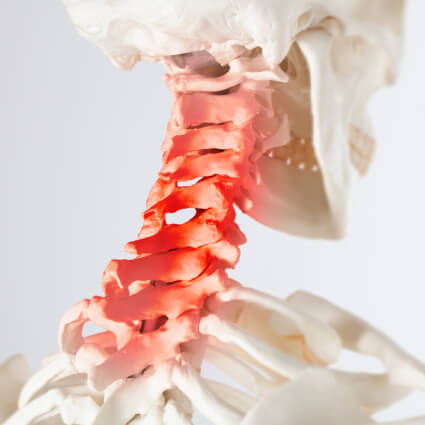 Between each of the seven bones (vertebrae) in your neck sits a small, tough cushion called an intervertebral disc. Each disc has a firm outer ring and a softer, gel-like centre, and together they let your neck bend, turn and absorb load. “Neck disc problems” is an everyday umbrella term for several related changes in these discs.
- Disc degeneration (cervical spondylosis): the gradual, largely age-related “wear and tear” thinning of discs and the surrounding joints. It’s extremely common and often causes no symptoms at all.
- Disc bulge: the disc’s outer wall pushes outward slightly beyond its normal border.
- Disc herniation (often called a “slipped disc”): some of the softer inner material pushes through a weak point in the outer wall. The disc doesn’t actually slip out of place — the name is misleading.
When a bulge or herniation, or bony changes from degeneration, narrow the space where a nerve root exits the spine, that nerve can become irritated or compressed. This is called cervical radiculopathy, and it’s what people usually mean by a “trapped nerve in the neck”.
Good news first: imaging studies show that disc bulges and degeneration are found in large numbers of people who have no neck pain at all. A finding on a scan doesn’t automatically explain your symptoms — which is why a careful clinical assessment matters more than the scan alone.
What symptoms do neck disc problems cause?
Symptoms vary widely, and many people have disc changes without ever noticing them. When symptoms do occur, they can include:
- Mechanical neck pain and stiffness — an ache that’s often worse with certain positions or movements and eases with others.
- Reduced movement — difficulty turning or tilting the head comfortably.
- Headache arising from the neck (cervicogenic headache) — typically felt at the base of the skull or spreading toward the temple.
- Referred or radiating symptoms — if a nerve root is irritated, pain, pins-and-needles, numbness or weakness can travel into the shoulder, arm or hand, following the path of that nerve.
How do neck disc problems tend to progress?
This is where there’s real reason for reassurance. Most neck disc problems — including many cases where a nerve root is irritated — settle with time and conservative (non-surgical) care. Research into cervical radiculopathy caused by a disc herniation shows that a large majority of people improve substantially over the first few months, and surgery is needed in only a minority of cases. Symptoms can grumble and flare, but the overall direction of travel is usually toward improvement.
That natural history shapes sensible management: support the body while it recovers, keep you moving and comfortable, and reserve scans and specialist referral for the situations that genuinely need them.
Where does chiropractic care fit in?
Chiropractors are statutorily regulated healthcare professionals who assess and manage mechanical disorders of the musculoskeletal system, with a particular focus on the spine. For someone with neck disc changes, chiropractic care is best understood as part of a conservative, hands-on approach to the mechanical neck pain and neck-related (cervicogenic) headache that often accompany those changes — alongside clear advice and, where appropriate, working with your GP or other clinicians.

A thorough assessment first
Care starts with a detailed case history and physical examination — how your neck moves, muscle and joint function, and a neurological screen when arm symptoms are present. A key part of this is identifying whether your presentation is straightforward mechanical neck pain, or whether there are features that need onward medical assessment or imaging. At Chiropractic First we also have on-site digital X-ray available where it is clinically justified.
Hands-on care and self-management for mechanical neck pain
For mechanical neck pain, evidence supports a multimodal approach — that is, combining several elements rather than relying on one. In practice that can include gentle joint mobilisation and, where appropriate, manipulation, soft-tissue work, and a tailored programme of exercises and posture and activity advice you can carry on at home. It’s worth being candid about the evidence: for neck-related nerve symptoms specifically, the research base for manual therapy is still limited and of modest quality, showing mainly short-term benefit for pain and movement. We use it as part of a wider plan, not as a promised fix.
Knowing when to refer on
A responsible chiropractor is also a good gatekeeper. If your assessment suggests a problem that sits outside conservative musculoskeletal care — significant or progressing nerve involvement, or any red-flag features (below) — the right step is prompt onward referral to your GP or an appropriate specialist, not more of the same treatment.
⚠ When neck symptoms need medical attention — not chiropractic care
Please contact your GP, NHS 111, or urgent/emergency care rather than booking a chiropractic appointment if you experience any of the following:
- Progressive or significant weakness, numbness or clumsiness in the arms or hands, or problems with balance or walking
- Symptoms in both arms or both legs, or a change in bladder or bowel control
- Neck pain following a significant injury, fall or accident
- Fever, unexplained weight loss, or severe pain that is constant, unremitting or worse at night
- Dizziness, fainting, sudden severe headache, difficulty speaking or facial drooping — seek emergency care
These can be signs of conditions that require urgent medical assessment. If in doubt, get checked promptly.
What to expect at Chiropractic First
Your first visit is an assessment appointment, not a rushed treatment. We take a full history, examine your neck and related areas, screen for anything that needs medical referral, and explain in plain language what we find. If chiropractic care is suitable for your presentation, we’ll outline a realistic plan — including what you can do yourself between visits. If it isn’t the right fit, we’ll tell you and help point you in the right direction.
Simple self-care that helps most necks
- Keep moving. Gentle, regular movement is generally better for necks than prolonged rest.
- Break up static postures. If you work at a screen, reset your position and move your neck and shoulders regularly through the day.
- Set up your workspace so the screen is roughly at eye level and you’re not craning forward.
- Mind your sleep set-up. A supportive pillow that keeps your neck in a neutral position can make a real difference.
- Stay active overall. General fitness and strength support recovery and resilience.
Neck pain you’d like assessed?
Chiropractic First is an established clinic in the heart of Hove, easily reached from Brighton, Portslade and across the city. If neck pain or stiffness is affecting your day, book an assessment and we’ll give you a clear, honest picture of what’s going on.
Frequently asked questions
Is a slipped disc in the neck the same as a herniated disc?
Can chiropractic care cure a herniated disc in my neck?
Do neck disc problems get better on their own?
Do I need a scan before I’m seen?
Is it safe to have your neck treated when you have disc problems?
Where is your clinic and how do I book?
*This article is for general information and education only. It is not a substitute for individual clinical assessment, diagnosis or advice, and it does not describe guaranteed outcomes — everyone’s neck and circumstances are different. If you have neck pain or related symptoms, please seek assessment from a suitably qualified healthcare professional. If you have any of the warning signs listed above, contact your GP, NHS 111 or emergency services. Dr Lewis Kingsnorth is a Doctor of Chiropractic registered with the General Chiropractic Council (reg. 3359).